A recent incident involving an American Airlines pilot and an airport worker sparks debate over access rights and potential racial profiling at a jet bridge.
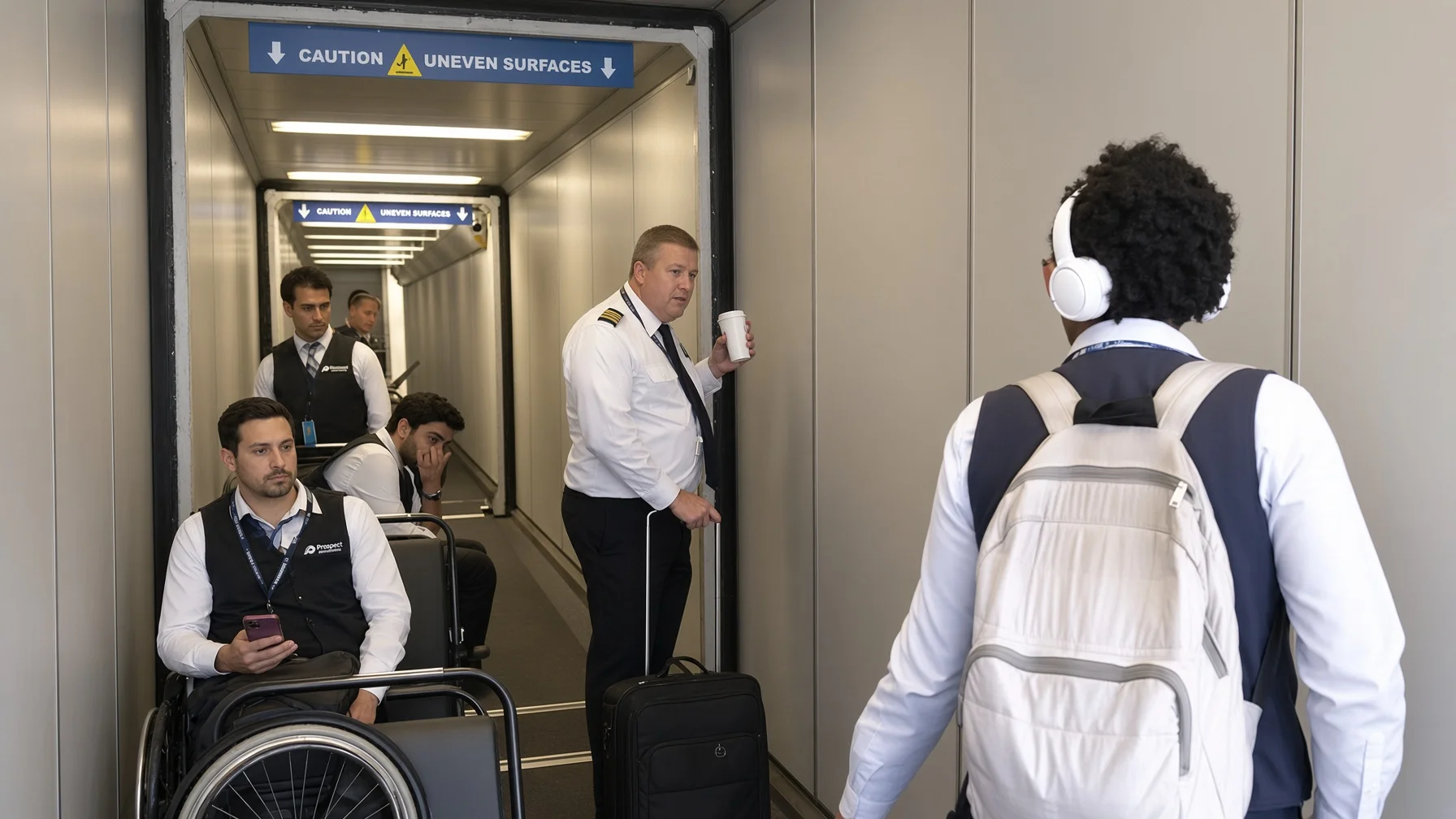
An encounter between an American Airlines pilot and an airport worker on a jet bridge has ignited discussions about access rights and racial profiling in airport security. The situation escalated when the pilot questioned whether the worker belonged in the area while he was in uniform and displaying his identification badge. This exchange underscores a broader conversation about authority, race, and professional boundaries in environments where security is paramount.
The Incident Unfolded
The altercation began when the pilot reported the worker to a gate agent, expressing doubts about his presence. This was not a simple misunderstanding; it highlighted the existing tension in aviation spaces. The worker, who was there to assist passengers arriving on a flight, documented the incident and asserted his right to be in that position. “That guy … doesn’t look like he belongs here,” the pilot reportedly said, targeting the worker's appearance rather than focusing on the evidence of his employment.
What followed turned the tables. The worker shot back, reminding the pilot that he was also subject to the same scrutiny: “Now, you’re the one that’s supposed to be scanned.” Such a retort challenges not just the pilot's authority, but also exposes an often-overlooked aspect of airport security: the responsibility of all individuals, regardless of their position, to adhere to regulations. This moment encapsulated a critical tension; the worker's confident stance was a direct push against the pilot's presumptive authority.
Watch the jet bridge confrontation posted by briccbabymusicgroup_.
The gate agent, aware of the worker’s credentials, quickly recognized the pilot's assumptions as misplaced. The worker pointed out that he had been successfully performing his job for years, and he implicated race by emphasizing how the pilot zeroed in on his appearance. Specifically, he flagged the focus on his jewelry and fashion choices, suggesting that these elements influenced the pilot’s perception of legitimacy. This aspect is significant; it raises uncomfortable questions about the everyday biases that can seep into professional interactions, often without conscious awareness.
Federally Mandated Security Protocols
From the footage, it’s evident that the pilot, possibly a first officer given his uniform insignia, eventually retreated toward the terminal after the worker reminded him that he too needed to be checked before entering the secured jet bridge area. Federal regulations dictate challenge procedures for individuals lacking authorized identification in restricted areas, making the pilot's actions perplexing. This contradiction is particularly striking given that pilots undergo extensive security training themselves; they should understand, better than most, the importance of complying with access protocols.
The access rules in airport environments serve more than just procedural functions—they reinforce the layered security measures essential for maintaining passenger safety and confidence. The mistaken belief that a pilot's authority within the confines of an aircraft grants them overarching control over all personnel nearby is flawed. A captain's responsibility to operate an aircraft does not extend to overriding established security protocols governing access to the jet bridge. This misinterpretation of roles can lead to significant breaches in both safety and professionalism.
The Ripple Effect on Social Media
This incident has sparked a divide in opinion on social media, with numerous comments addressing potential racial profiling. While suggesting that conflicting ethnicities inherently indicate racial motives can be reductive, the pilot’s behavior prompted enough raised eyebrows to mask substantive discourse on both sides. Many observers noted that the pilot's actions reflect broader trends observed within the aviation industry, where pilot unions sometimes lack diversity.
What this means for you, the reader, is that the aviation industry is still grappling with how to foster inclusive workspaces while ensuring operational efficiency. Conversations around race relations often morph into discussions about professional ethics and security, emphasizing the need for ongoing training and awareness among all airport personnel. The worker's reaction revealed an essential point: when staff members disclose their credentials, it's not just about displaying identification; it's a call for mutual respect and adherence to confirmed processes.
Public Perception and Workplace Dynamics
The discussion surrounding this event highlights the complexity of human interactions in professional settings, especially when compounded by biases, whether overt or subtle. Airport personnel, including pilots, must adhere strictly to credential verification procedures. This incident showed that even strong hierarchical structures like those in aviation can crack under pressure. The worker's reminder that he had been recognized is profound; it emphasizes the professional validation that all workers deserve, irrespective of their roles.
Interestingly, some comments took a lighthearted turn, highlighting the absurdity of someone trying to escalate an airline dispute to the American Airlines Center in Dallas. Such misdirected grievances only added to the absurdity of the situation. In the end, the incident became a talking point about larger societal issues within the industry's framework.
Looking Ahead: The Significance of Professional Awareness
Ultimately, this incident serves as a reminder that when questioning the legitimacy of others' access, professionals must first ensure their own compliance with security protocols. The pilot's unchecked behavior calls into question the understanding—and perhaps, the training—of security measures among those in positions of authority. It underlines a significant takeaway for individuals in the aviation industry: self-awareness in professional conduct isn't optional; it’s imperative.
As conversations around racial dynamics and workplace equity continue to evolve, various stakeholders, from airline management to individual employees, must engage in dialogues that promote understanding and compliance. After all, at the heart of this interaction was not just a dispute over access but an opportunity to reflect on how each individual’s approach to their role impacts the overall safety and dynamics of the workplace.

Discussion
Sign in to join the discussion.