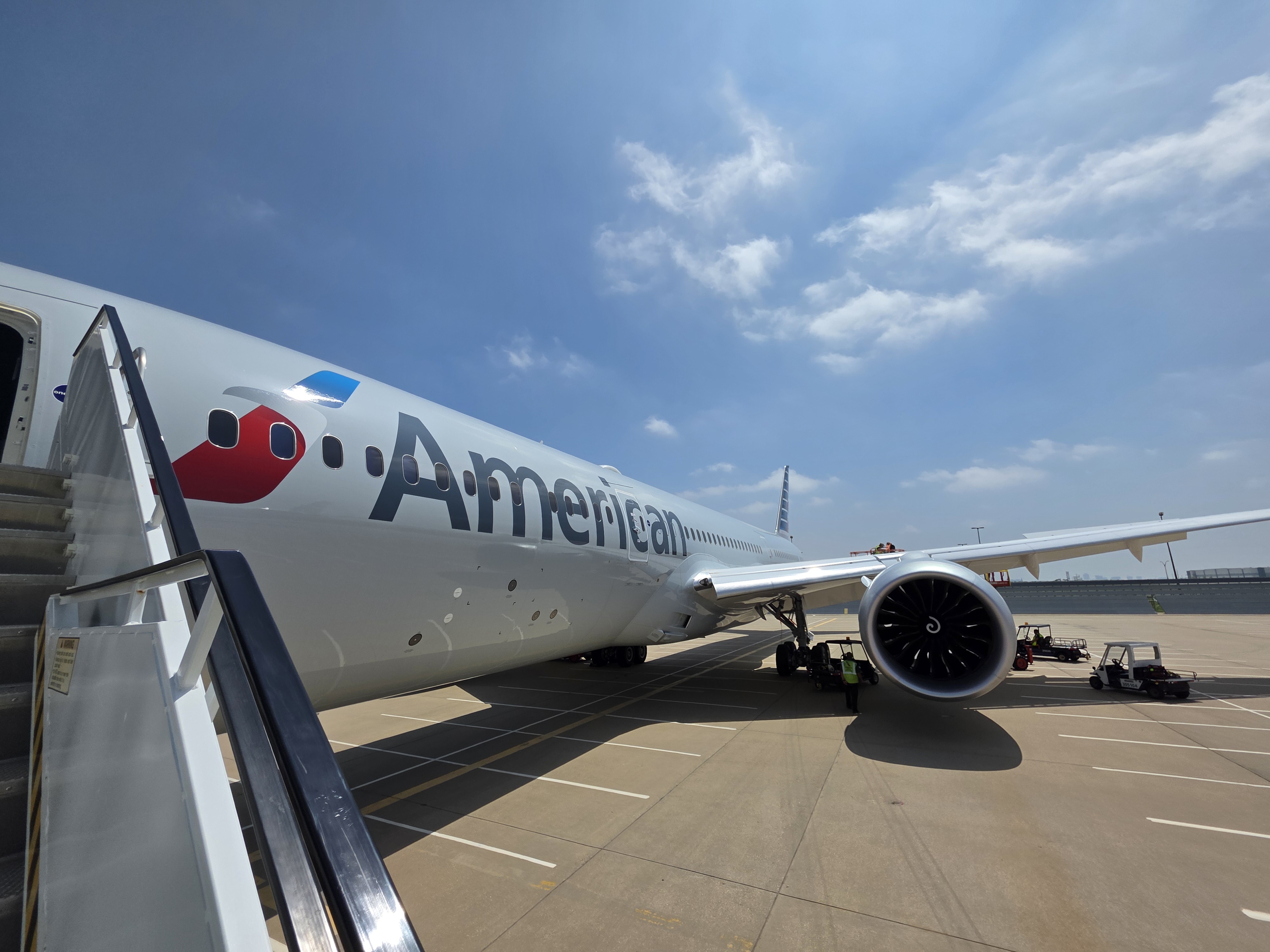
American Airlines is set to revive its Los Angeles-Asia routes, leveraging new Boeing 787 deliveries and terminal upgrades ahead of the 2028 Olympics.
Key Developments in the Airline Industry:
American Airlines Expands Asian Services
-
American Airlines' Chief Commercial Officer Nat Pieper revealed plans to expand flights from Los Angeles to Asia as the airline receives additional Boeing 787 Dreamliners.
American has a total of 19 Dreamliners on order, with three expected to join the fleet next year, and an additional six slated for delivery by 2028.
According to Pieper, the airline will focus on strengthening its Asian routes, particularly as the $1.6 billion overhaul of its terminals 4 and 5 at LAX approaches completion ahead of the 2028 Olympics.
Previously, American Airlines scaled back its L.A. to Asia flights due to competitive pressures, a strategic decision that arguably diminished its presence in a key market for credit card spending. Now, with the terminal upgrades on the horizon and plans to reclaim gates, the airline seems poised to re-enter this vital route.
Challenges and Opportunities in the Asian Market
Despite American Airlines’ ambitious plans to ramp up flights to Asia, there's a reason for skepticism. For years, the airline's presence in critical Asian markets like Tokyo and Seoul has been perceived as limited compared to competitors. Other airlines such as Delta and United have successfully capitalized on the demand for trans-Pacific travel, making it all the more crucial for American to not only reinstate but also enhance its offerings. This jet-set emphasis on Asia is no mere coincidence; the region has been a significant source of revenue for American Airlines, particularly in high-value business travel. As Nat Pieper pointed out, the terminal renovations at LAX will dovetail with these new flights, potentially transforming the airport into a premier hub for travelers heading to Asia. But why go all-in now? The impending 2028 Olympics is a massive draw. It’s a chance for American Airlines to reclaim business from competitors and establish itself as a premier carrier for international travelers. Given the growing demand in Asia for travel, both personal and corporate, American has an opportunity to secure a lucrative foothold.Operational Improvements at Washington Dulles
Potential Implications of Lounge Enhancements
The reopening of the Capital One Lounge at Washington Dulles marks more than just a return to business as usual. Prolonged limited service periods can lose customer trust, especially among premium travelers who expect a certain standard of amenities while waiting for flights. Capital One’s decision to invest in ventilation and infrastructure is telling of a deeper concern for customer experience in times of heightened health awareness due to the pandemic. Travelers have shifted their preferences significantly; they now prioritize comfort and safety in airport lounges. Should the lounge meet expectations, it could attract more cardholders who appreciate access to refined services, potentially enhancing Capital One's reputation in the travel banking sector.Leadership Changes in Asian Airlines
Concerns Surrounding Leadership Qualifications
The bid for the CEO position at Thai Airways by the King’s eldest son raises eyebrows for several reasons. For one, lack of relevant experience could lead to detrimental decision-making in an industry that’s already navigating turbulence. The aviation sector is not simply about making flights operate on time; it requires nuanced understanding of international markets, competition, regulatory environments, and even customer service dynamics. An inexperienced leader could struggle with steering Thai Airways through inevitable market challenges, especially when restructuring might be necessary for better financial health. With airlines worldwide recovering from pandemic-induced losses, Thai Airways needs astute leadership to capitalize on rebound opportunities — something that could be jeopardized if the wrong person leads.Partnerships in Transportation Tech
The Shift Toward Integrated Travel Solutions
This collaboration emphasizes an ongoing trend toward integrating different modes of transportation into a single user-friendly experience. Blacklane’s partnership with Bilt aims to cater to travelers who don’t just want a ride; they’re looking for convenience and reliability. Traditional ride-sharing hasn’t always met those expectations, particularly for families or larger groups. One aspect many overlook is the perceived luxury of Blacklane’s services. If you’re working in this space, you could view this partnership as a step toward catering to a premium market; people are more willing to spend for accessibility and comfort. This isn’t just about getting from A to B; it’s about elevating the entire travel experience.Guest Experience and Hotel Services
What This Means for Hospitality Standards
Incidents like the hotel shower bottle labeling issue reveal deeper insights into the hospitality industry. Small details can either elevate or significantly detract from guest experience. In a competitive market, if your hotel can’t get the little things right—like labeling soap and shampoo—guests may reconsider their choice, especially when there’s ample competition. These operational inefficiencies haunt hotel brands more than many realize. After all, customers often remember their experiences based on these small, sometimes overlooked, aspects.American Airlines appears ready to reclaim its share of the crucial L.A. to Asia market, eying growth potential through its new aircraft and airport renovations. Will these strategic moves reinvigorate the airline's competitive edge? Time will tell.

Discussion
Sign in to join the discussion.