Airlink's recent low flypast over DHL Stadium during a rugby match has sparked discussions on aerial safety, prompting regulatory scrutiny.
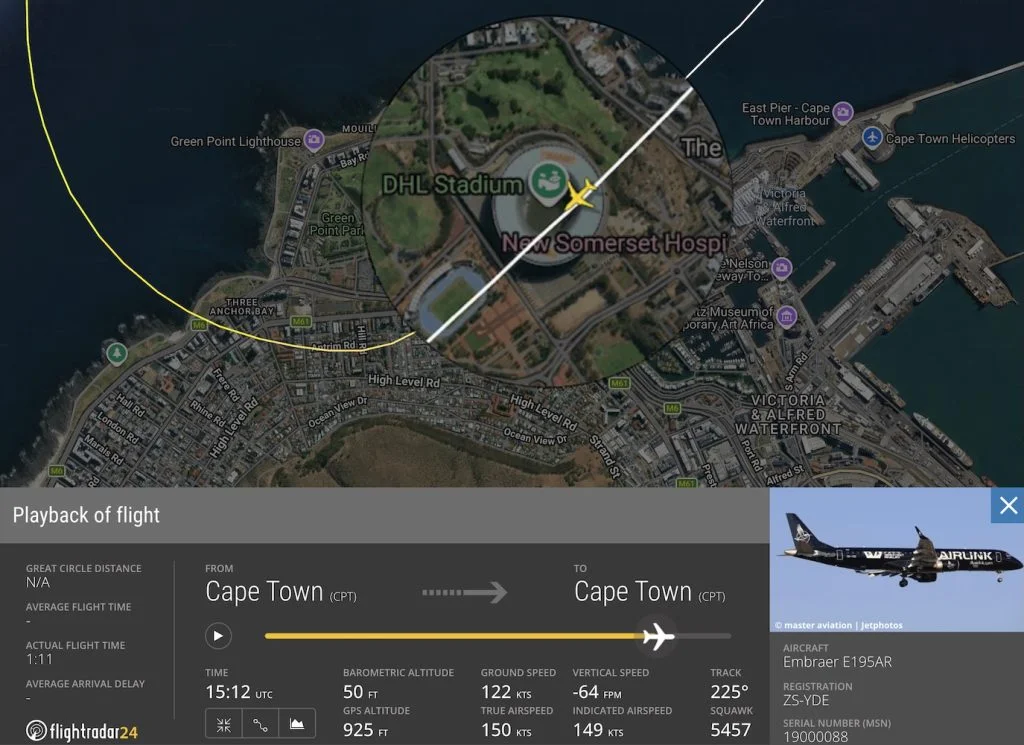
In a striking display before the second test of Rugby’s Greatest Rivalry between South Africa and New Zealand, Airlink aircraft executed a low flypast over DHL Stadium in Cape Town. Data from Flightradar24 indicates that the lead aircraft flew at an altitude of less than 50 feet above the stadium's structure.
Assessing the Altitude Above the Stadium
Calculating the height above the terrain requires understanding local air pressure, the elevation of the stadium, and its structure's height. Recent data indicates that the aircraft's lowest reported altitude was 50 feet, though correcting this with standard pressure factors suggests an actual altitude of 205-210 feet above mean sea level. Given the stadium's elevation is near sea level and its height is 164 feet, the clearance over the roof was assessed to be approximately 41-46 feet.
Understanding altitude calculations in aviation is often a nuanced affair. Factors like air pressure can shift, causing variations in reported altitudes. This complexity has implications for safety measures, especially during public displays. Because the stadium sits at a low elevation relative to sea level, precise information is key. Flying at an altitude of just over 40 feet above the roof might seem safe during a flypast, but it raises significant questions about risks to spectators and the structural integrity of the stadium itself.
Watch the Flypast
Planning. Precision. Performance. ✈️✈️
— Airlink (@Fly_Airlink) August 29, 2026
Spectacular scenes of Airlink’s double Embraer flyover at the DHL Stadium.
Airlink is Proud Official Sponsor of Rugby’s Greatest Rivalry, presented by Castle Double Malt 🏉#Airlink #FlyAirlink #FlyTheLink #Skybucks #RugbysGreatestRivalry pic.twitter.com/3tPNepftLS
Accompanying the low flypast was a social media excitement that captured the public's imagination. It's not just about aviation finesse; it taps into a deep cultural connection many South Africans have with rugby. The event drew crowds to the stadium, and along with it, a surge of social media engagement. People took videos, shared experiences, and engaged in discussions around the spectacle of two sleek Embraer aircraft flying in formation above a rugby game — a popular sport in the region.
Response from Airlink
30 August 2026, Cape Town - In response to social media concerns surrounding the flyover, Airlink emphasized that the operation required extensive planning and precision. Conducted at approximately 150 knots, the low-altitude maneuver was guided by the South African Civil Aviation Authority and Air Traffic Navigation Services to ensure safety compliance. The two planes, flown by experienced crews, adhered strictly to the approved safety protocols.
The response from Airlink tries to quell the public's concerns but raises its own questions. While the company highlights the experience and adherence to safety protocols, one can't help but wonder if those assurances were enough. The context here is paramount: low flypasts, especially over densely populated or crowded areas, can be contentious. Given the altitude involved, how effective were these protocols in addressing potential risks?
Details on the Aircraft
The aerial display featured two Embraer aircraft: an E195 (ZS-YDE), dressed in a black livery, and an E190 (ZS-YAE) in green. Both aircraft were part of the formation that caught the public's attention.
Embraer aircraft are noted for their operational efficiency and versatility. Known for being reliable in various conditions, the E195 and E190 models provide an intriguing mix of performance and aesthetic appeal. Using such aircraft for a public display highlighted Airlink's branding strategy as well. Their choice aligns the company not just with aviation, but with the deeply ingrained passion for rugby among South Africans, essentially blending two cultural pillars into one exciting moment.
A Popular Flypast and Its Fallout
The popularity of the flypast extended beyond aviation, inspiring a local game called FlappyLink, where players navigate obstacles like the stadium and flying birds.
(And this is the part most people overlook) The impact of such events is often more significant than strictly commercial interests. The fusion of aviation and sports can spark a sense of community, encouraging engagement that transcends traditional fandom. That said, creating games and social media buzz around such events can blur lines between entertainment and safety, inviting scrutiny that the aviation community must address seriously.
Regulatory Scrutiny Following the Flypast
The South African Civil Aviation Authority is now examining the details of the flypast. They have initiated compliance checks after discussions regarding the event surfaced. The regulatory body announced that Airlink has chosen to withdraw its application for a subsequent flypast at the upcoming test match scheduled for September 5.
A regulatory response like this carries weight. It reflects the serious implications of public safety and compliance in aviation. If you're working in this space, you understand how such events impact public perception and regulatory frameworks. The withdrawal of the application hints at Airlink’s recognition of the potential backlash and suggests a need to recalibrate its future performances in line with safety considerations.
Implications and Future Outlook
Looking ahead, Airlink's recent flypast and the ensuing scrutiny could lead to tighter regulations for future aviation displays, particularly those linked to large public events. The precedent set here might define how regulators approach similar displays in the future.
If Airlink plans more flypasts, it must consider not just the technicalities of flight safety but also public sentiment and regulatory alignments. The intersection of aviation and events like the Rugby test could prove to be a double-edged sword. On one side lies the opportunity for unique marketing engagements, and on the other, the need for a meticulous approach to public safety regulations.

Discussion
Sign in to join the discussion.