Fatal Air Freight Mishap at Miami International Airport Under Investigation
Published Sep 06, 2026Reads 932By Ian Petchenik
A Boeing 767 freighter crash at Miami International Airport resulted in multiple fatalities and injuries, prompting a thorough NTSB investigation.
The Recent Air Freight Incident at Miami International Airport
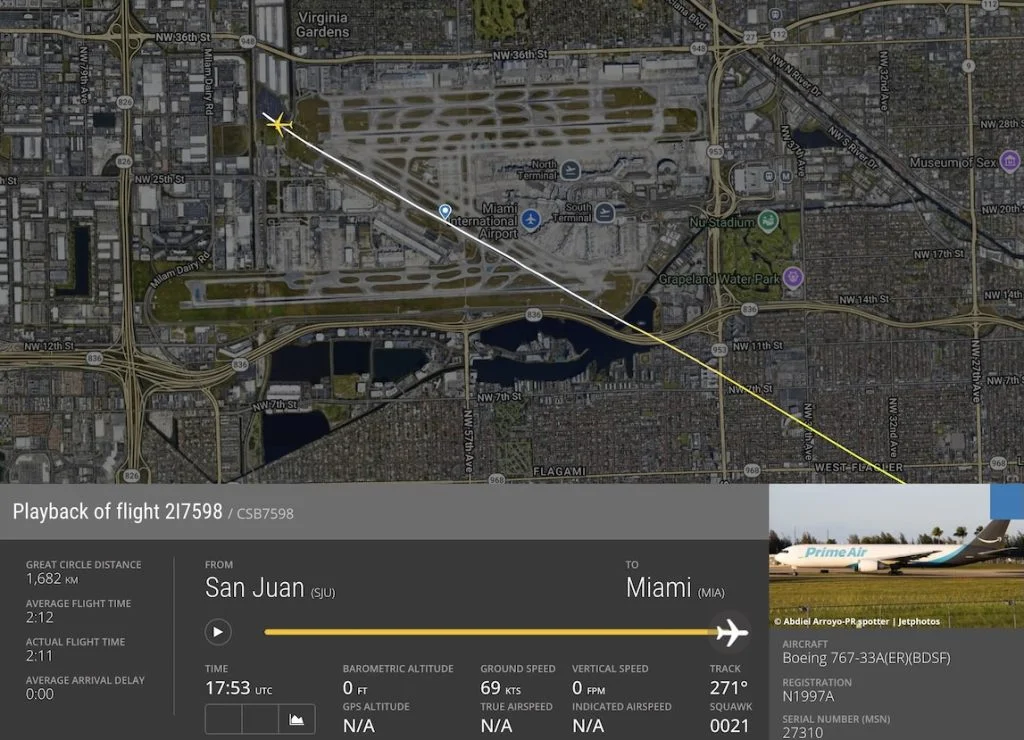
On September 6th, a tragic event unfolded at Miami International Airport when a 21 Air 767 freighter, serving Amazon Prime Air, suffered a catastrophic landing mishap. This Boeing 767, registered as N1997A, overran runway 30 and came to rest dangerously close to a parking lot adjacent to an Amazon warehouse and various businesses. The crash resulted in a fire, leading to a devastating report of at least five fatalities and multiple injuries, as confirmed by Miami-Dade County Mayor Daniella Levine Cava.
The critical investigation into this incident is being led by the National Transportation Safety Board (NTSB), which is deploying a Go Team to gather insights and evidence surrounding the circumstances of the crash. An initial briefing by the NTSB is scheduled for September 7th, marking the beginning of what is expected to be a thorough inquiry into the factors that led to this incident.
Flight Path and Preliminary Details
Flight CSB7598, which originated from San Juan, Puerto Rico, and landed in Miami shortly before the accident, completed its journey in just over two hours. Utilizing data from Flightradar24, it's been recorded that this flight's approach to runway 30 included a speed of 112 knots just prior to exiting the runway's usable area, slowing to 69 knots at the time of the incident.
For those interested in further analysis of the flight's trajectory and data, downloadable CSV and KML files related to CSB7598 are currently available, with additional resources expected to follow soon.
Comparative Analysis of Runway 30 Landings
A comparative visual of CSB7598’s landing trajectory illustrates stark contrasts with previous landings, including a LATAM Cargo 767 that executed a successful landing as recently as 20 minutes prior. This raises essential questions about what might have differentiated these flights’ approaches and whether there were underlying mechanical or environmental influences at play.
Aircraft Profile
The aircraft involved, a 21 Air Boeing 767-33A(ER)(BDSF), has had a significant history. Originally intended for passenger transport from 1994 until its conversion to cargo in 2015, the plane is powered by CF6-80C2B6F engines. The age and experience of this model affirm the airline industry's reliance on older aircraft for cargo operations.
Weather Conditions at the Time
Weather may also factor into the analysis, as reports from the time of the incident indicated thunderstorms and gusting winds at the airport. The METAR data recorded shows winds at 17 knots, with gusts reaching 26 knots, complemented by a visibility of 10 statute miles. Thunderstorms and scattered cumulonimbus clouds posed additional challenges during the landing.
Ongoing Investigative Developments
In the days following the incident, the NTSB has been actively updating the public on its findings. The data extracted from the flight data recorder paints a concerning picture: the plane touched down at a high speed, with critical systems such as speed brakes and thrust reversers reportedly disengaged during the critical landing phase.
As efforts continue into the exploration of this tragic landing mishap, the aviation industry watches closely. Further updates from the NTSB will likely provide crucial insights on how to prevent such catastrophic events in the future.
Lessons from the CVR Analysis
The timeline captured in the cockpit voice recorder (CVR) reveals critical insights into the 21 Air 767’s landing incident in Miami. While the precise mechanics of why the aircraft overran the runway are still under investigation, the recorded exchanges between pilots offer a deeper understanding of what transpired during those final moments.
At 6:02 minutes before the end of the recording, a pilot's command to set the flaps to one degree marked a transition into the landing phase. The conversations highlighted varying levels of urgency and compliance among the flight crew. For instance, at 1:42, concerns about airspeed surfaced when one pilot warned that they were going too fast to lower flaps to 20 degrees. This raised alarms about situational awareness—the communication didn't adequately reflect a cohesive understanding of the aircraft's dynamics.
What stands out is the series of electronic callouts as the plane approached landing. Alerts like “sink rate” and “too low terrain” were initiated multiple times as they neared the ground. This repetitive warning not only underscores potential automation reliance but also poses a question: Were the pilots sufficiently engaged with the situation, or had they become desensitized to these warnings?
The recording drew to a tense finish at the 15-second mark when a go-around was called, a last-ditch effort to regain control—a clear indicator that the landing was no longer deemed safe. This moment begs reflection: In critical scenarios, could heightened coordination and clear communication have averted the subsequent overruns and potential hazards?
As we sift through the details of this incident, there’s a crucial takeaway: the relationship between technology and human decision-making in aviation safety must be continually scrutinized. If you’re involved in this industry, these findings highlight the necessity of not just reliance on automated systems but also an emphasis on effective communication and the human factors at play.
Looking Ahead
Moving forward, the implications of this analysis extend beyond this single incident. It serves as a reminder that every landing is a collective effort, not just a maneuver conducted by pilots but a complex interaction between human skills and automated processes. This incident could inspire further inquiry into training protocols and the design of these automated systems to ensure they bolster, rather than hinder, pilot performance.
For all involved in aviation safety—whether you're a regulator, a pilot, or in equipment design—the conversation around enhancing situational awareness and decision-making in high-stakes environments is vital. As we continue to explore these insights, let’s not forget the lessons learned from critical situations like the one faced by the 21 Air 767.

Discussion
Sign in to join the discussion.