A Vietnam Airlines 787 experienced a tail strike and runway overrun during takeoff from Munich, prompting an investigation by the German BFU.
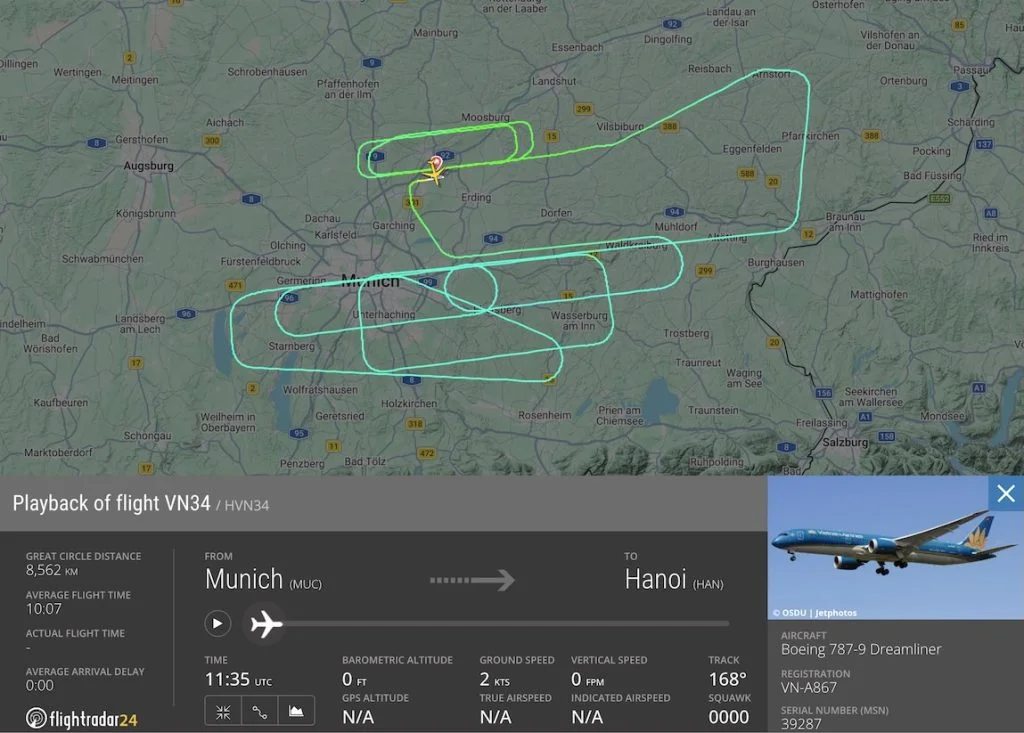
On August 15, a Vietnam Airlines 787-9, registered as VN-A867, encountered a significant incident shortly after departing from Munich, heading to Hanoi. During takeoff from runway 26L, the aircraft overran the runway, resulting in a tail strike. It managed to gain altitude immediately and subsequently jettisoned fuel to reduce weight for a safe return.
Incident Details
This incident unfolded during the critical moments following takeoff. According to the German Federal Bureau of Aircraft Accident Investigation (BFU), the aircraft took off at 11:57 UTC (13:57 local time), but a late rotation caused the tail to strike the runway. This information raises concerns about the takeoff procedures followed by the flight crew. Evidence, including tire marks, was found at the end of the runway, indicating the plane’s path as it proceeded beyond paved surfaces. The exact sequence of events leading to this mishap is crucial for understanding the underlying causes.
The damage assessment reveals the potentially severe implications of this incident. The tail section and main landing gear incurred substantial harm, which could signal deeper systemic issues with either aircraft maintenance or pilot training protocols. Beyond this, runway lights were damaged, and several tires on the aircraft also showed signs of distress during the overrun. Each of these factors could have resulted in operational delays not just for Vietnam Airlines but also for the broader Munich airport operations.
Fuel Jettison Protocol
Fuel management is a critical aspect of aviation safety. After reaching 9,000 feet, flight VN34 was directed south of Munich and performed maneuvers to jettison fuel, an essential safety protocol in emergency situations. Overweight landings can significantly affect stopping distances and overall safety, which is why this procedure is well-established across the industry. The aircraft re-entered the airspace in a controlled descent, taking a low pass to allow ground controllers to inspect the landing gear before safely landing back in Munich at 13:57 UTC (15:57 local time) on runway 26R. This response demonstrates the crew's understanding of emergency protocols, showcasing their ability to act quickly in a high-stress situation.
Investigation Status
The investigation by the BFU is a vital step in understanding what went wrong in this incident. They've initiated a thorough inquiry, with both digital flight data recorders recovered for analysis at their Braunschweig facility. This process highlights the importance of data in modern aviation investigations. Under ICAO Annex 13 guidelines, Germany is leading the investigation, with participation from Vietnam, the state of operator, and the U.S. NTSB, representing the aircraft and engine manufacturer. Involving multiple stakeholders complicates the investigation process but also brings a wider range of expertise to bear on the issues at hand.
A preliminary report is expected in about a month, while the final analysis may take up to a year to complete. These timelines underscore the complexity of aviation investigations, where gathering and analyzing data can be laborious. Insights from initial assessments already hint that deviations in handling and decision-making during takeoff will be closely scrutinized. This scrutiny is critical, as understanding decision-making processes during such a high-stakes moment can yield lessons applicable across the aviation industry.
The incident raises important questions about procedural adherence and aircraft responses during critical phases of flight. What went wrong? Were the correct protocols followed? If you’re working in this space, you know that questions like these can lead to substantial changes in aviation regulations and operational guidelines. The implications of this case might lead to recommended changes in pilot training or aircraft maintenance standards, shaping future flight safety practices.
Implications and Future Outlook
This incident's significance may be more extensive than it appears at first glance. It serves as a reminder of the dangers inherent in aviation, where failure to adhere to procedural protocols can result in potentially catastrophic outcomes. The investigation’s findings are likely to spark discussions among airlines and regulatory bodies regarding safety measures, especially those concerning takeoff and emergency protocols. Aviation is one of the most heavily regulated industries in the world, and such incidents can lead to stricter guidelines or updated training programs that address identified flaws.
And here's the thing: the involvement of multiple international agencies can complicate investigations but also enrich them. The collaborative nature of aviation safety investigations has historically led to the development of improved safety measures. One point that might not be obvious is that incidents can often result in costly upgrades or changes that affect an entire fleet. As the insights from this particular investigation emerge, it’ll be interesting to see how Vietnam Airlines, and indeed the international aviation community, responds.
If you’re following this incident, keep an eye on the upcoming preliminary report. It could reveal issues that may impact not just Vietnam Airlines, but also serve as a warning to other airlines operating similarly advanced aircraft. The ongoing dialogue about pilot training, aircraft technology, and adherence to protocols remains pivotal in ensuring that such incidents don’t become more frequent.

Discussion
Sign in to join the discussion.