Many hotels are choosing to forgo Wi-Fi in rooms, claiming it's for guest wellness, but this trend may cause unnecessary stress for modern travelers.

The Wi-Fi Dilemma in Hospitality
Travelers have often expressed their highest expectations for hotel amenities. However, there's one detail that can significantly influence booking decisions: the presence or absence of Wi-Fi. Recently, I've noticed a trend where hotels proudly proclaim, often in stylish fonts over idyllic images, that they don't provide Wi-Fi in rooms. The rationale? A desire for guests to be “present.” How thoughtful of them. But therein lies a complicated issue. In a digital age when connectivity is almost omnipresent, could this move be more about branding than genuine concern for guest wellbeing?
Here's the thing: I never asked for my Wi-Fi to be turned off. It seems hotels are assuming they know better than their guests what constitutes a pleasant experience. This presumption becomes problematic. You see, the expectation of modern amenities has shifted; today’s travelers expect to stay connected, whether for work or personal reasons. Making choices for guests—instead of letting them make their own—can lead to frustrations that overshadow any potential benefits of unplugging.
Clarifying the Context
Let’s clarify. This criticism excludes truly remote locations where Wi-Fi isn't feasible—think backcountry ski lodges or tented camps in remote deserts. I'm referring to those establishments that have the infrastructure to provide internet access but withhold it under the guise of promoting mindfulness or wellness. It’s essential for hotels to recognize their audience. Travelers have varying needs, and a one-size-fits-all approach won’t cut it when guests are seeking tailored experiences.

Remote work in Northern BC after viewing grizzlies all day. Photo: Suzie Dundas
For many, including freelancers like myself, a few minutes of checking emails can provide peace of mind—confirming whether anything urgent needs attention. Without Wi-Fi nearby, I find myself tethered to a common area, stressing about missed assignments rather than enjoying the escape. The irony here is thick: Total relaxation seems counterproductive when I can't simply peek at my inbox. By punishing guests with digital deprivation, hotels risk turning vacations into anxiety-inducing breaks from work.
Underlying Assumptions About Connectivity
The issue intensifies with the intention behind these Wi-Fi policies. It’s not just a suggestion to unplug; it’s a mandate that implies guests lack self-control. It presumes the only way to promote a digital detox is to make it impossible to connect. However, making adults feel incapable of managing their own devices is misguided. We have agency over our choices and should not require a hotel’s intervention to put our phones away. This mandate to disconnect borders on patronizing. Are guests truly unable to manage their own screen time, or are hotels just misinterpreting what their clientele truly needs?
For many of those with unlimited paid time off, getting away from work while enjoying a vacation is possible and encouraged. But you shouldn't opt for a hotel that restricts access to Wi-Fi just to escape work responsibilities. You can ignore emails whether your router is on or off, and you should enforce some boundaries instead of relying on motel rules. In essence, the responsibility of enjoying a break should lie with the individual, not the establishment.
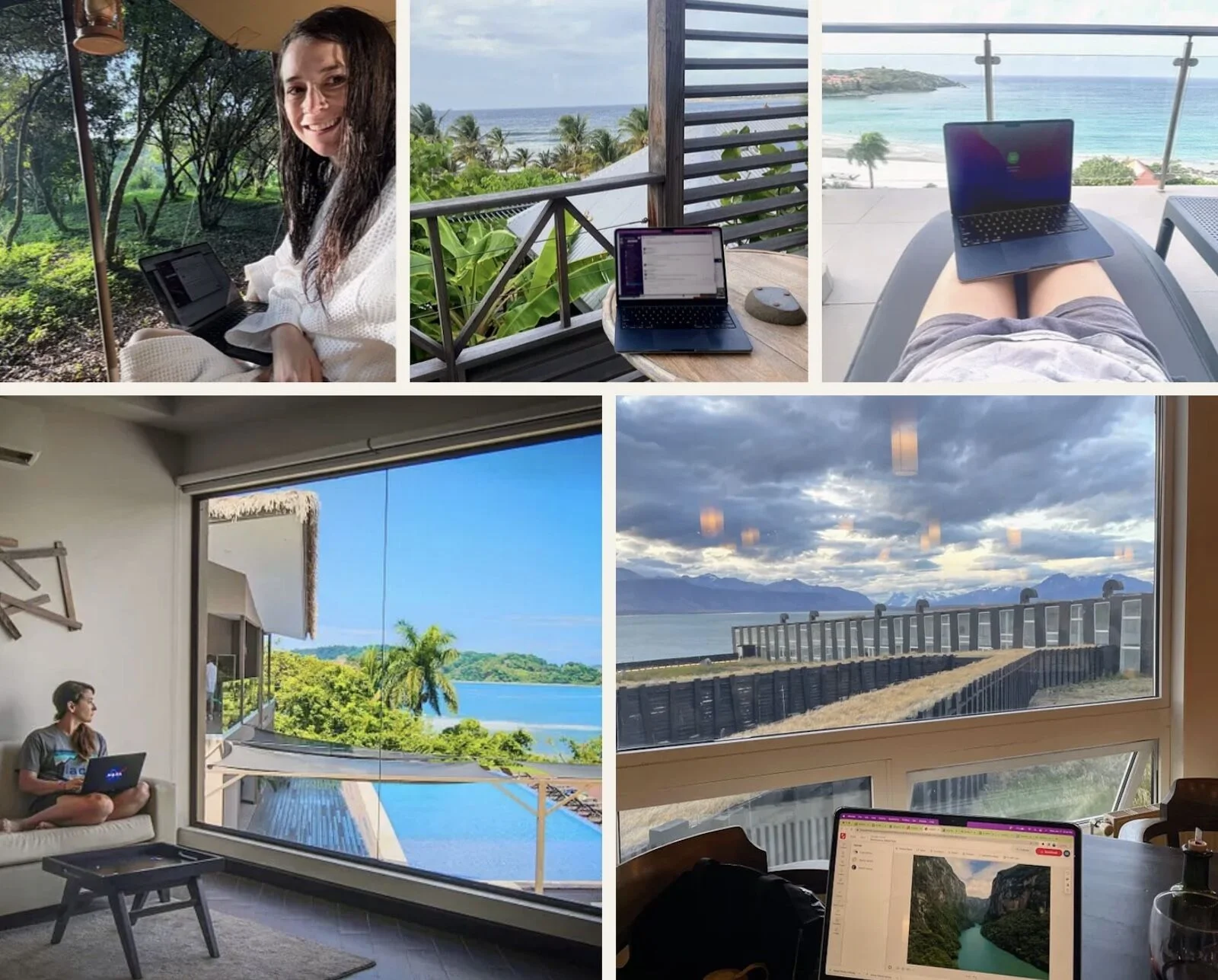
Me, working remotely, from literally everywhere I can, including Costa Rica, Kenya, and Patagonia. Photos: Suzie Dundas
The Choice to Disconnect
Let me clarify: disconnecting while on vacation can have its merits. Many travelers genuinely benefit from taking a break from the digital world. The key point here, though, is that this choice should reside with the guest, not be dictated by the hotel. If you can’t provide internet access, that’s understandable. But I cannot accept the notion that a standard hotel decides to withhold connectivity and then frames this denial as a generous gift. It’s misleading at best and incredibly short-sighted at worst.
So, let’s keep the Wi-Fi active. If someone prefers not to use it, they certainly don’t have to. Simple as that. The notion that hotels can play gatekeeper to our digital lives is outdated and, honestly, a bit absurd. Imagine if other amenities followed suit—what if a hotel decided to withhold hot water because they thought it’d promote a “back to basics” experience? That’ll never happen, because guests expect those necessities.
As a personal anecdote: the value of Wi-Fi isn’t lost on me even in budget accommodations. That unassuming La Quinta that my dog loves happens to offer fantastic Wi-Fi. It makes an enormous difference when working remotely. Being connected allows me to enjoy my surroundings even more, knowing my responsibilities are in check.
Future Implications of Connectivity Policies
If you're working in this space, it’s essential to consider what these trends mean for the future of hospitality. As travel preferences evolve, hotels may find themselves at odds with their clientele’s expectations if they continue to withhold crucial services like Wi-Fi. This approach not only risks guest dissatisfaction but could also impact marketing and pricing strategies.
Hotels need to adapt their business models to foster guest autonomy and provide the connectivity they desire. This shift will likely become increasingly significant as remote work continues to rise. The demographic of travelers is changing; younger generations prioritize technology access—willing to pay a premium for good internet. In an industry that thrives on guest satisfaction, understanding this shift will be paramount. And yet, some establishments cling to archaic notions of “digital detoxes” at the expense of valuable customer experiences—an approach that may look increasingly out of touch in the years to come.
Until next time, whether we're online or off,
–Suzie Dundas, Matador Network

Discussion
Sign in to join the discussion.