An American Airlines passenger’s bathroom mishap gained traction on social media when customer service requested her confirmation code for assistance.

An American Airlines traveler recently experienced an unusual predicament while flying from Philadelphia to Lisbon: she found herself stuck in the aircraft lavatory and took to Twitter to seek help. Her plea for assistance prompted the airline's social media team to respond, but not before asking for her confirmation code—a move that sparked widespread discussion online. Can you imagine being trapped in a tiny space at 30,000 feet, with no immediate rescue in sight?
The Incident Unfolds
Fortunately, the passenger eventually escaped the confined space. Contrary to initial perceptions, she clarified that she hadn’t been trapped for an extended period; instead, she dozed off after her initial request for aid, missing the flurry of responses from onlookers until later. Her experience unfolded on flight AA258, where the lavatory door refused to budge, prompting her attempts to attract attention by knocking. It's a scenario many can relate to: the frustration of needing help but feeling unheard.
American Airlines' Response
American Airlines responded to her tweet approximately eight minutes later, but the nature of their request for a booking reference left many scratching their heads. While it's sensible to identify passengers through their confirmation codes, the request felt quite routine given the urgent nature of her situation. This raises questions about how airlines prioritize customer safety versus their operational protocols; she had already provided her flight details, needing just someone to intervene and unlock the door. In emergencies, one would think that verifying a booking code should be secondary to providing immediate assistance.
Social Media Reactions
Reactions to her predicament varied widely. Some followers criticized her for not leveraging the cabin crew instead of tweeting, despite her insistence that she had knocked for help. This criticism underscores a deeper issue regarding customer service in the air. In environments where communication is often limited, social media becomes a lifeline, yet it can also generate misinterpretations. Others responded with light-hearted solutions, such as lighting a cigarette—a suggestion certainly out of touch with the context of being trapped in an airplane lavatory. Amid the chaos, she even requested her followers to stop engaging with her posts as the attention became overwhelming, drawing over 1.1 million views in a short time. The incident reflects the strange intersection of personal crisis and public spectacle in the social media age.
Inside an American Airlines Boeing 787-9 lavatory
Comparative Incidents: A Broader Context
This incident evokes memories of a similar scenario from February 2016, where Amanda Carpenter was trapped in an elevator at BWI Amtrak station. Amtrak's response nearly seven months later humorously questioned her status with, “Are you still in the elevator?” Such comparisons highlight the sometimes comical disconnect between service protocols and real-life emergencies. This isn't just a single failure; it casts a spotlight on how different transportation services handle crises.
The American Airlines Twitter team’s interaction brought to mind historical instances where passengers needed unorthodox means for rescue. There are stories of Delta pilots using a butter knife to free passengers stuck in lavatories, or instances where the crew had to act swiftly under pressure, like the time a child and father were trapped for 35 minutes on a Delta flight. Stories like these bring to light the absurd and sometimes frightening experiences passengers can face when systems fail. (And this is the part most people overlook.) The morale of airline crew and their quick thinking often makes all the difference in saving face during such incidents.
- A Delta pilot rescuing a passenger with just a butter knife.
- Another airline's passenger stuck for 35 minutes due to a malfunctioning door.
- An American Eagle passenger requiring a complete door removal to escape.
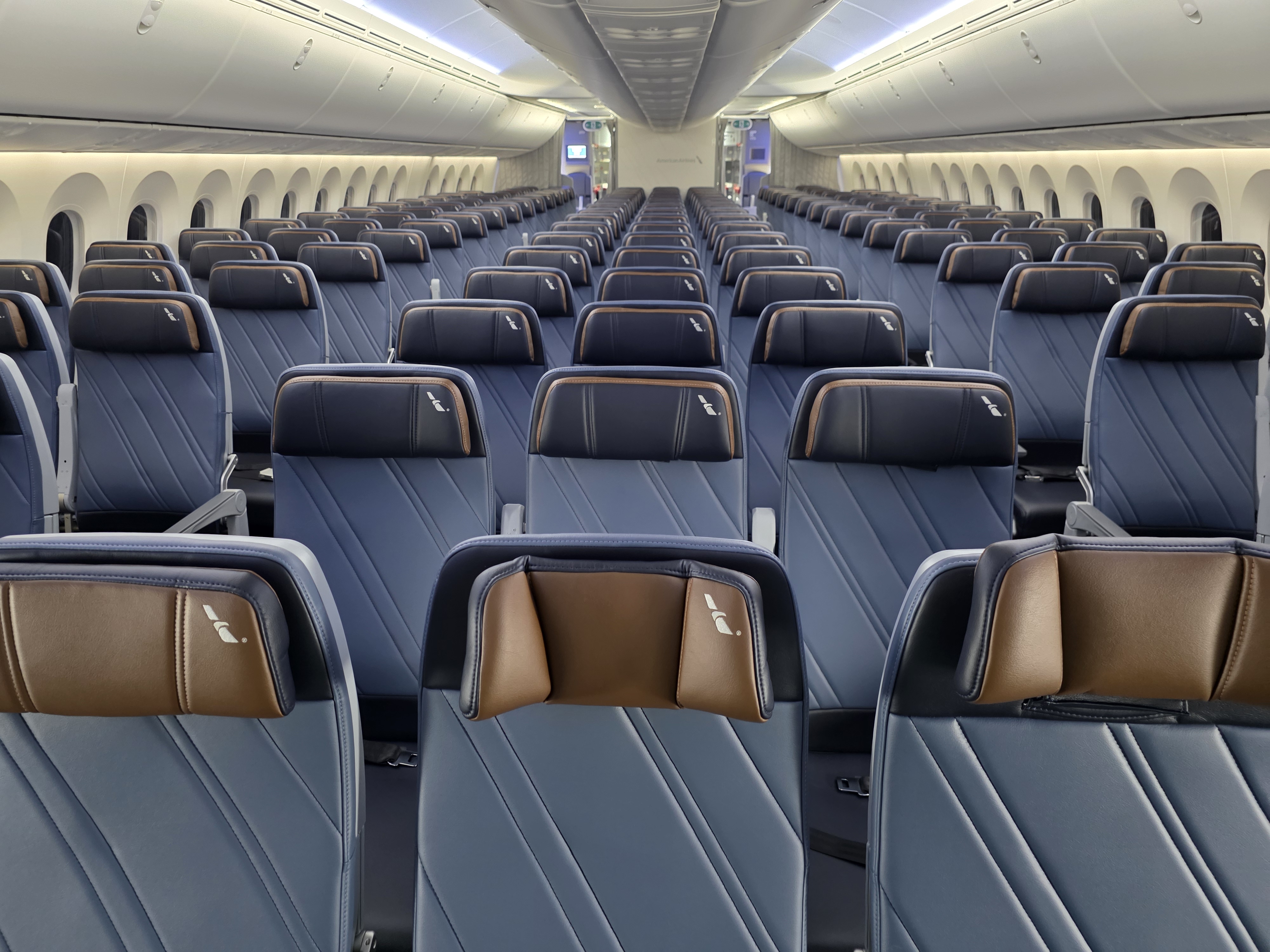
American Airlines Boeing 787-9
Aftermath and Implications
After escaping the lavatory, the passenger faced a new challenge—the surge of online attention drained her phone battery, prompting concerns about being alone in Europe. This incident serves as a humorous yet unsettling reminder of customer service's potential pitfalls and the ever-watchful online community. If you're working in this space, you realize that the ramifications might go beyond just one person's ordeal. Airlines need to reassess their protocols in how they handle emergencies, not just to safeguard passenger experiences but to refine their social media strategies as well. When a situation escalates, there’s a palpable need for airlines to switch from routine procedures to an immediate resolution approach.
In the end, while the story may seem amusing on the surface, it reflects a serious issue in how airlines manage crises. It calls for a critical examination of both safety protocols and real-time communication methods. Travelers deserve assurances that their need for assistance will be met with priority instead of bureaucracy. This is more significant than it looks, as the airline industry increasingly navigates the complexities of public relations in a highly connected world.

Discussion
Sign in to join the discussion.