A Delta flight attendant expresses frustration over passenger behavior and management's response, revealing significant challenges in enforcing safety regulations.
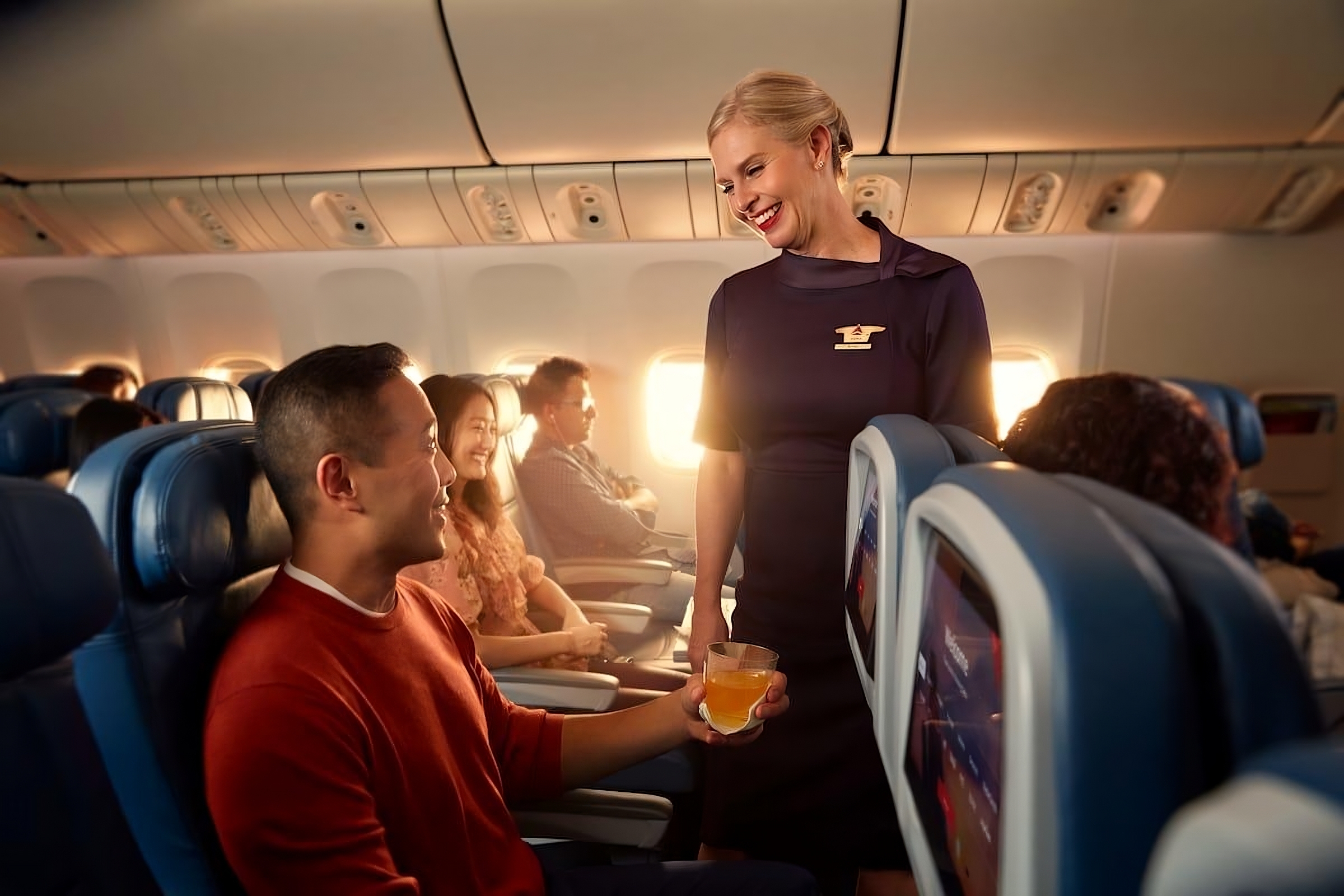
A flight attendant at Delta Airlines has publicly shared her frustrations, claiming that passenger behavior has reached its peak of entitlement and disrespect. In a candid statement, she remarked, “The job is amazing. I hate the passengers,” highlighting a sentiment that resonates with many in the industry. The crew member feels that the increasing disrespect from passengers has led her to disengage from enforcing crucial safety protocols. Instead, she finds herself primarily serving snacks and drinks.
Compliance checks don’t exist anymore. FAA regulations are just sentences in a book. We can’t enforce them, passengers don’t listen.
Management's Role in Flight Attendant Experiences
This assertion raises not just individual grievances but broader questions about Delta's management strategies. It shines a light on how airline leadership supports or undermines the roles of flight attendants, especially when it comes to safety protocols. Recent patterns suggest that many airlines seem to prioritize customer satisfaction over crew authority, often leaving attendants feeling marginalized. This situation is compounded by a prevalent expectation among passengers, particularly those who pay high fares, that their economic contribution grants them voice over operational protocols.
Every airline passenger interaction is a study of power dynamics. If a flight attendant asks a passenger to adhere to rules—like wearing a seatbelt or stowing bags correctly—the attendant is often met with hostility, especially when there’s a belief that the premium fare provides leeway. This culture creates a disheartening scenario where flight attendants might hesitate to enforce safety measures, potentially risking passenger safety in the name of customer service.
The Pressure of Premium Pricing
According to the attendant, customers paying a premium for their tickets presume they have license to ignore rules. She argues that when passengers push back against reasonable requests or queries, they quickly escalate complaints to higher management, which consistently sides with the customer. This environment discourages flight attendants from upholding safety guidelines and supporting their peers, fostering a toxic cycle of misbehavior. It’s a scenario that's likely to persist unless management takes definitive action to empower crew members rather than cater exclusively to customers.
Notably, a user on social media posited a cynical view of Delta's reputation for having a more congenial flight crew. They noted that some passengers favor Delta precisely because crew members may overlook transgressions that other airlines would more strictly enforce. This sentiment feeds into a feedback loop where relaxed rules contribute to higher customer satisfaction ratings. Yet, it shows a clear need for the airline to evaluate how its customer service ethos could be linked back to genuine safety and security for all aboard.
Congregate in the galley/workspace, land with a drink in your hand, have bags at the bulkhead. If a crew member says anything, photograph them!
Incidents like these point to a broader concern: the perception that Delta's management has instructed its crew not to enforce basic carry-on rules. Most airlines stipulate limits on the size and number of personal items in overhead bins, yet reports suggest that Delta flight attendants are left to navigate these rules at their discretion, often resulting in inconsistent enforcement. For travelers seeking clarity, this leads to confusion and frustration, as they may witness others breaking rules with little to no consequence.
About Those Complaints
There’s also an underlying notion among flight attendants that some passengers intentionally create situations to claim compensation. One attendant shared an observation where individuals go out of their way to inconvenience themselves, just to provoke staff and garner miles or refunds. This manipulative behavior not only burdens crew members but also deteriorates the travel experience for everyone involved.
They look for ways to inconvenience themselves and try to provoke flight attendants so they can get miles. Many are outright liars, and the airline just gives them miles.
This perspective reveals another layer of complexity regarding passenger behavior. It's a strategy often masked as grievances against the airline, but in reality, it shows a calculated approach to exploit the system. The quest for compensation isn't unique to Delta; it reflects a more pervasive trend observed across airline interactions. Travelers seeking refunds for nonexistent issues contribute to an atmosphere of distrust, which challenges all stakeholders involved.
Comparing Passenger Behavior Across Airlines
The discussion around Delta passengers raises the question: are they truly the worst? The flight attendant's remarks could be misleading. Across the industry, passengers can exhibit entitled behaviors, as evidenced by incidents on airlines like Frontier and Spirit, including public altercations and violations that have gone viral. Each airline certainly has its share of unruly customers, suggesting that the issues Delta faces aren't singular but rather indicative of a wider industry challenge.
Historical context reveals that while Delta has positioned itself to cater to business travelers who presumably offer better behavior, this doesn’t absolve the airline from managing challenging customers. Just because you're spending more money doesn't necessarily equate to better behavior. An individual attendant's experience may skew her perspective, as biases can surface based on limited interactions and personal observations. That said, broad assumptions can be misleading; it's essential to recognize that every airline has its share of difficult personalities.
The Role of Unions and Workplace Dynamics
The chatter around potential unionization surfaced in the wake of the flight attendant's frustrations. Some believe that a union could transform working conditions and empower individuals to better manage passenger behavior. Unions often serve as a means for employees to voice collective concerns, but the efficacy of such representation isn't without drawbacks. It's essential to recognize that unions don’t inherently resolve all workplace issues or guarantee better relations between employees and management.
At present, non-unionized Delta employees enjoy lucrative pay structures and profit-sharing that may not remain as attractive under union representation. The experience of unionized crews at other airlines often reveals dissatisfaction akin to what Delta flight attendants currently express. For instance, studies show that up to 91% of crew members at United felt undervalued, raising questions about whether unionizing would truly address the core problems faced by Delta flight attendants.
Understanding Contemporary Passenger Dynamics
The evolution of air travel has opened the skies for a more diverse passenger pool, resulting in varied expectations and behaviors. Today, more travelers can afford flights that were once considered luxuries. However, this increase in accessibility can lead to conflicts among passengers who bring different social norms into cramped cabins. If you're working in this space, the challenge is clear: how do you navigate these shifting dynamics?
The increase of onboard disputes may be attributed to unmet expectations or personal stresses accompanying travel. Individuals on any flight may be grappling with significant life events, leading to heightened tensions and misunderstandings during the journey. And this is the part most people overlook: travel is often more than just getting from point A to point B. People are dealing with stress, expectations, and sometimes the last-minute chaos that can spill over into their interactions with crew.
The Implications for the Airline Industry
With the complex interplay of pricing, customer behavior, and workplace dynamics, the airline industry faces ongoing challenges in maintaining a courteous atmosphere in the skies. The experiences articulated by flight attendants like the one who spoke out serve as a sobering reminder of an internal crisis within the profession—caught between passenger expectations and operational realities. Airlines must re-evaluate both crew support structures and customer management strategies to foster a healthier environment for all involved.
What this means for you, whether you're traveling or working within the industry, is a recognition that relationships are crucial. The manner in which airlines manage personnel and customer satisfaction will have lasting repercussions on their reputation and operational success. The ability to balance these competing interests could very well determine the future of commercial air travel.

Discussion
Sign in to join the discussion.