Scott Kirby says airline credit card profits are overstated, yet United’s own strategy ties network reach to card signups and customer loyalty.
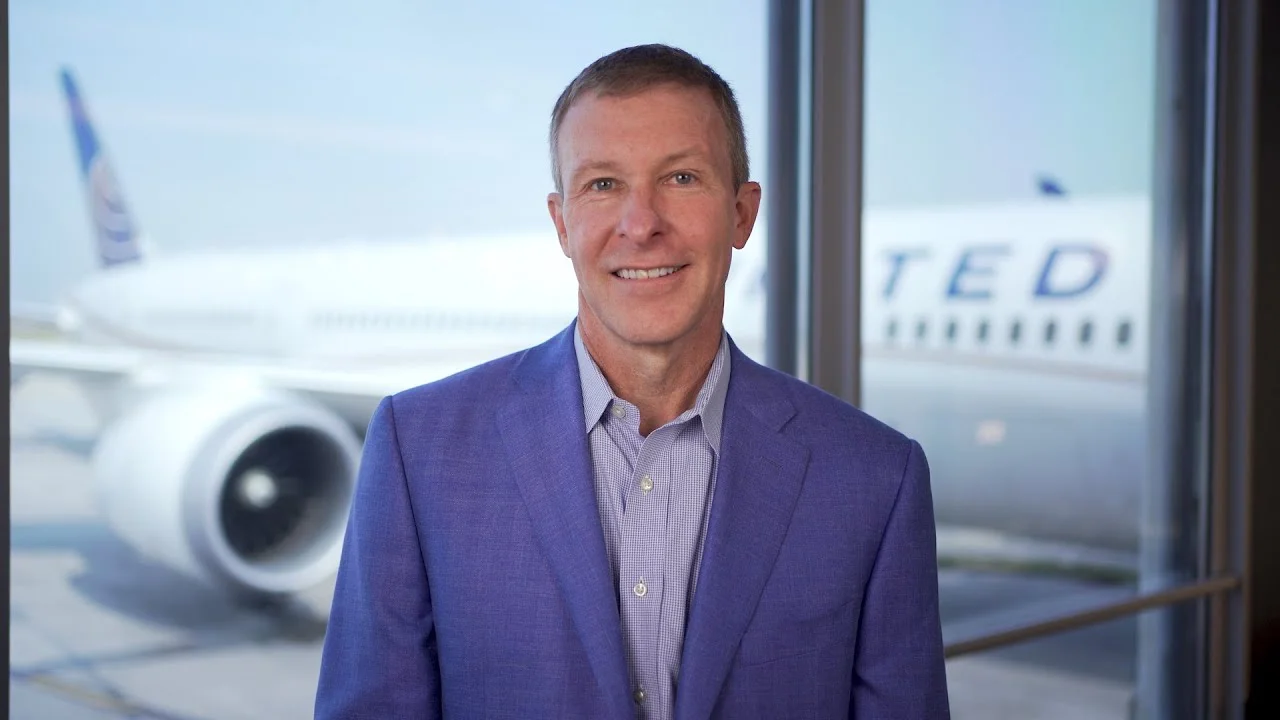
United Airlines CEO Scott Kirby’s argument about credit card profits collides with a strategy he has described for years: build a useful route network to attract cardholders. That tension matters as United presses American Airlines to shrink at Chicago O’Hare, where flights can support both ticket sales and the card business tied to customer loyalty.
Kirby made his latest case in an interview with John Collison and Ben Thompson on Cheeky Pint. He told airline leaders to be skeptical when a route is defended as “strategic,” arguing that they should cancel it. The advice lands awkwardly alongside his earlier explanation that a stronger network can help an airline win customers and sell more credit cards.
Kirby’s case against “strategic” routes
Kirby’s advice to a new airline CEO was blunt: “If you hear the word strategic flying, you don’t need to know what hub it is, you don’t need to know what route it is, you should cancel it.” He said executives may justify weak routes by claiming they help attract corporate customers or credit card signups. As he put it, “If we’re not big in this city, then we just won’t get the credit card—”
The context is a fight over Chicago. United has sought to expand at O’Hare, a major market for airline card spending, while challenging American’s position there. United’s expansion plans were blocked by the FAA, according to the source article. Kirby now says American could lose roughly $1.5 billion in Chicago this year, a figure that depends on how the airline’s costs are allocated.
American CFO Devon May said in March that Chicago covers its direct operating costs, aircraft ownership and hub-specific expenses. The reported loss emerges after allocating corporate overhead. Leaving the market wouldn’t erase those costs; American would assign them to its remaining hubs. A plane might earn more elsewhere, so there is still an opportunity cost to weigh, but the full allocated loss doesn’t equal the savings American would realize by exiting.
What credit card economics include
Kirby argues that observers mistake card revenue for profit because they overlook the cost of award travel. “We carry over 50,000 people a day. 50,000 people today will fly free on United Airlines by using their credit card miles. Nobody counts the cost,” he said. He added, “All that we disclose is the revenue.”
That last claim doesn’t hold up. United has disclosed redemption payments and operating expenses in a financing presentation, and its income statement includes a line for “Revenue, net of redemptions.” During the pandemic, airlines borrowed against frequent flyer programs, giving investors a closer view of how those businesses generated cash. American’s disclosures, for example, showed about $2.3 billion in revenue at a 44% margin in 2019.
There’s a real accounting question underneath Kirby’s complaint. Some people may treat MileagePlus revenue as if it were all profit, while an award passenger can take a seat that might otherwise have gone to a paying customer. Revenue recorded when miles are redeemed may not capture every internal cost in the way an airline would want. But the claim that nobody counts the costs is too broad: United reports some of them.
The network can create card value
The deeper issue is that card economics don’t belong to one route. In October 2017, Kirby argued that rebuilding United’s hubs and improving connections could make the airline more useful to travelers in smaller cities. That usefulness could bring more United flights, MileagePlus membership and credit card applications. He made a similar argument in January 2018, saying growth in a market could increase signups and revenue from Chase.
The link isn’t automatic. Customers can choose bank points or cash back, and an airline’s miles have to offer value. Still, an airline’s schedule can shape whether a traveler sees its card as worth carrying. A customer in Chicago might choose an American card because American offers the flights needed for work throughout the year, then use the miles for a family trip to Hawaii.
In that example, the Hawaii flight provides the award seat, but the Chicago schedule helped acquire the cardholder and generate spending. Assigning all the card revenue to the destination where miles are redeemed can make Hawaii look more profitable and Chicago less so. If American cuts Chicago service, the traveler may shift work trips, and eventually card spending, to United. The remaining miles could still be redeemed on a Hawaii flight, leaving the destination with the apparent benefit after the route that helped create the spending has disappeared.
That allocation problem complicates claims about which routes truly earn their keep. It also makes a hub’s value wider than its direct ticket revenue: Chicago flying can support connecting traffic and corporate relationships across American’s network, as well as its card business.
United’s own strategy makes the point
United’s approach to Starlink offers a clear example of Kirby looking beyond revenue from a single transaction. The airline is making Starlink Wi-Fi free for MileagePlus members. Free access can give passengers a reason to enroll, provide United with a customer it can market to, and create a prospect for a Chase card. Judging the service only by Wi-Fi access revenue would miss those downstream goals.
Kirby has described Starlink as a way to get passengers to try United, then keep them through the airline’s broader product and technology. He explicitly connected that effort to loyalty and cards: “We’re going to get customers to switch their loyalty to United. Get our credit card, switch their loyalty to United.” The strategy relies on the same kind of indirect value he questions when competitors defend routes as useful for card acquisition.
Airline credit cards generate significant, high-margin revenue, but that business depends in part on whether customers find an airline useful. Delta has cited the card opportunity as a reason for building its Austin service, where it already sees potential for its American Express relationship. American has said it aims to grow its Citi relationship to $10 billion.
Kirby may be right that analysts should account for the cost of award travel. But network decisions also shape who earns miles, who spends on an airline card and where that spending originates. For United, the practical lesson is already embedded in its own playbook: service that looks marginal on a route-by-route basis can still help build a more valuable customer relationship.

Discussion
Sign in to join the discussion.