A Delta customer received an apology with AI drafting instructions still attached, raising questions about review and the airline’s expanding use of automated support.
The problem with Delta’s customer apology wasn’t that an employee used AI to draft it. Writing tools can help support teams turn a rough response into a clearer one, especially when agents handle repetitive questions. The problem was that nobody caught the drafting instructions before sending the message to a customer. That points to a basic quality-control failure: the airline’s review process let the tool’s working notes pass as part of the finished reply.
The apology and the copy-and-paste failure
A SkyMiles Diamond Medallion member shared an email after complaining about customer service. It opened with the words: “Here’s a more polished and professional version with a warm, empathetic tone:” The passenger posted the exchange on Reddit; Enilria flagged it. That introductory line reads like an instruction to a writing tool, left in place when the message was copied into an email. The exchange doesn’t establish which tool was used or how the draft was produced, but the wording makes the apparent editing process visible to the recipient.
Delta just responded to my case with “Here’s a more polished and professional version with a warm, empathetic tone:” by u/TyrannosaurusBeckks in delta
The email then told the customer: “As a valued Diamond Medallion Member, you deserve knowledgeable, attentive, and seamless service, and I regret that we did not meet those expectations.” It’s a reasonable sentiment, but the unremoved AI preamble undercut it. An apology that announces it was made “more polished” and “empathetic” invites the reader to question how much of the concern came from the airline and how much from a prompt. A basic read-through should have caught the mismatch. This is more significant than it looks: the mistake turns a message intended to reassure into evidence that the final check may have been cursory.
The reply also said: “I have shared your feedback with our Flight Operations Senior Leadership team for review, and we will work closely with the appropriate departments to address the service shortcomings you described.” That claim raises its own question: why would a complaint about a customer service chat go to Flight Operations leadership? The message offers no way to tell whether the feedback was actually passed along. The wording may describe a real referral, or it may be a stock assurance; the exchange doesn’t resolve that. Either way, promising escalation creates an expectation that someone will examine the complaint and that the airline can stand behind the statement.
One Reddit commenter summed up the perceived status divide: “Silver medallions get the bots. Diamond medallions get the humans who paste the answers from the expensive bots. See, status still matters!” The line is sarcasm, not evidence about how Delta assigns cases. But it captures the reputational risk: when a high-status member receives a reply with visible drafting residue, customers may wonder whether loyalty status buys attention or merely a more carefully worded template.
Other commenters defended AI as a writing aid for support agents. That case makes sense when software helps an employee understand a customer’s complaint, find the relevant policy, or organize a clear reply. The employee still needs to check the facts and follow through on any promises. Here, the visible drafting note suggests that review failed. The distinction matters: customers can benefit from faster drafting, but they still need a person accountable for the substance of the answer. If you’re working in this space, the lesson is plain: editing assistance doesn’t remove the need to verify the finished message.
A wider support shift
This resembles a June case involving Cathay Pacific, where a passenger whose flight had been canceled received instructions intended for a writing assistant, including a direction to acknowledge feelings and keep a positive tone. The incidents don’t show that every airline response is AI-generated, or that every assisted reply is careless. They do show a recurring failure mode for this category of tool: an internal instruction can become customer-facing text if the handoff from draft to final message lacks a reliable check.
Delta’s own public stance adds another wrinkle. CEO Ed Bastian said he rejected an AI-written draft of his Emory commencement speech because it lacked his voice and warmth. Executives use human speechwriters, too, but the contrast is hard to miss when Delta customers receive apparently AI-assisted replies that go unchecked. The standard for a public speech and a routine support email may differ, yet both depend on someone deciding whether a draft sounds credible and says what the speaker intends.
The airline is also routing more support through automated tools. Delta ended text-message customer service and directs customers to its AI Concierge. That shift makes the quality of automated interactions more consequential: if a customer’s route to help increasingly begins with software, errors in the tool and weaknesses in human review can reinforce each other. The relevant question isn’t simply whether AI appears in support. It’s whether customers can get a clear answer and a dependable path to correction when something goes wrong.
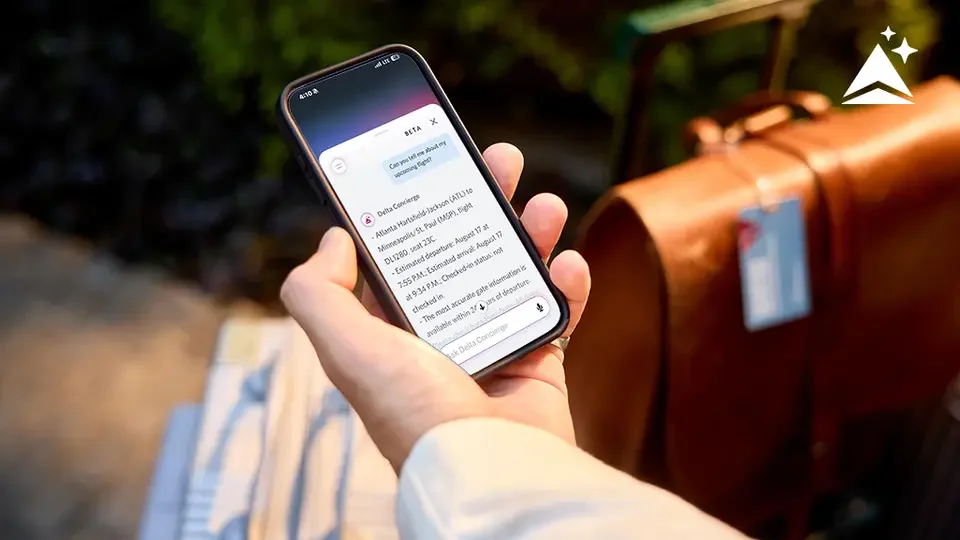
That system has already had a consequential error. In August, a Platinum Medallion member asked the Concierge to cancel an outbound flight while keeping the return. It said the return remained booked, but refunded the full 32,400-mile award ticket. Delta confirmed a bug with partial trip cancellations and restored her itinerary. That episode involved a booking action rather than a draft email, but both cases turn on the same practical test: can the system give reliable information, and is there an effective check when it doesn’t? A polished tone can’t compensate for an incorrect action.
What customers will judge
AI can help an agent write faster, but customers judge the result by whether the airline understands the problem and does what it says. The two Delta examples point to different risks: one exposes a weak check on written communication; the other shows how an automated tool can mishandle a trip change. And yet, the remedy begins with ordinary service discipline. A person needs to verify the reply’s claims, make sure any promised escalation has happened, and catch text that was meant only for the drafting process.
That’s the part most people overlook: the quality of an AI-assisted service experience depends as much on the surrounding workflow as on the software. The tools may help with speed or wording, but responsibility for the final answer still belongs to the airline. In this case, a short read-through could have prevented an avoidable embarrassment. The customer was left with a polished apology—and a reason to doubt it.
Not a small miss.
Discussion
Sign in to join the discussion.